Dit is wellicht de ergste nachtmerrie van elke TED-talker…
Namelijk dat de techniek het laat afweten terwijl je maar enkele minuten tijd hebt om je verhaal te doen…
Bron: TED / ImprovEverywhere ‘Spinning Beach Ball of Death’
Ontsnap. Steeds vaker. En verder..!
![De ergste nachtmerrie van een TED-spreker [Video]](https://www.fernweh.nu/wp-content/uploads/2012/03/404-Feelings-not-found-1024x400.jpg)
Dit is wellicht de ergste nachtmerrie van elke TED-talker…
Namelijk dat de techniek het laat afweten terwijl je maar enkele minuten tijd hebt om je verhaal te doen…
Bron: TED / ImprovEverywhere ‘Spinning Beach Ball of Death’
![Angela Merkel krijgt bierdouche [video] / Column Paul Postma: ‘Het gaat slecht in de horeca en dat is maar goed ook’](https://www.fernweh.nu/wp-content/uploads/2012/02/zee-900x400.jpg)
Filmpje: Bondskanselier Angela Merkel krijgt ongewild een bierdouche
Hieronder staat een erg grappige (en eigenlijk heel treurige) herkenbare column van Paul Postma. Ik moest eraan denken toen ik bovenstaand filmpje had gezien…
‘Ik heb geen hekel aan Nederland, maar in de horeca word ik wel op de proef gesteld.‘
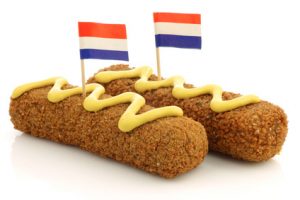
“This is fantastic: real Dutch meatrolls!” roept de menukaart mij toe. Door te weinig files heb ik een uurtje over, en omdat het toch lunchtijd is besluit ik om met mijn collega even een broodje te gaan eten. Op een terras aan de boulevard, want het is mooi weer en het is Noordwijk. “Wat wilt u drinken?” vraagt de ober. Het valt mij vaker op dat als je rond etenstijd in een restaurant iets wilt eten, je wordt gevraagd wat je wilt drinken. Waarschijnlijk een kwestie van winstmarge. Nu wil ik dat ook wel, maar ik kom om te lunchen. Dat schept verwarring. De ober zal zich al uit de voeten maken om eerst de drankjes te halen, maar gepokt en gemazeld als ik ben in Nederlandse restaurants – die meer op wachtkamers lijken dan op eetlokalen – beduid ik hem de menukaart uit te leggen zodat hij gelijk mijn bestelling kan opnemen. Ik heb tenslotte maar een uur voor dat broodje.
Het valt niet mee een broodje onder de tien euro te vinden, zodat ik angstig informeer of dat toch niet allemaal van die enorm lange stokbroden zijn vol prut die je met een heel gezin nog niet opkrijgt. Dat blijkt inderdaad het geval. Tot mijn oog valt op de aanprijzing in de aanhef. “Wat is dat?” vraag ik, “real Dutch meatrolls?” Die kosten zes en een halve euro, en dat geeft hoop. Hoewel de ober niet oogt als een vakantiekracht, heeft hij geen idee. “Er is geen menukaart in het Nederlands?” probeer ik hem te helpen. Nee, alles is in het Engels. Een briljante marketinggedachte in deze gelegenheid, waar behalve Nederlanders alleen Duitsers verkeren.
De ober moet het aan de baas vragen. Mijn collega bestelt alvast een broodje tonijn, waarvan wordt verzekerd dat het geen volledig stokbrood is, en ik wacht af. Na tien minuten blijkt het antwoord nog niet te zijn gevonden. Ondertussen krijgen wij ons drankje en mijn collega een gigantisch bord tonijn, waar bovenop een half broodje; eronder zit waarschijnlijk de andere helft. Na twintig minuten trek ik nog maar eens de aandacht. Inderdaad, ik word niet vergeten en nog eens vijf minuten later komt de chef echt. Hij weet wat het is, real Dutch meatrolls. Het gaat om twee kroketten met een boterham. Hij moet het drie keer zeggen voor ik begrijp dat dit het antwoord is. Maar ik vind inmiddels alles best, als ik maar wat te eten krijg, want heb ik nog tien minuten over. Kijk, en in die tijd kunnen de real Dutch meatrolls niet worden geserveerd. Ik werp mij schielijk op het bord tonijn van mijn collega, die – hoewel bekend om zijn gezonde eetlust – niet verder komt dan de helft. Achttien euro armer haast ik mij naar mijn cliënt. Ik heb geen hekel aan Nederland, maar in de horeca word ik wel op de proef gesteld. Ik ben iets te laat. “Hebben jullie al geluncht?” vraagt mijn relatie bij binnenkomst. ”Anders haal ik even een broodje.”
In: Postma, P., ‘De gehaakte aardbei. Waarom klanten en marketeers elkaar niet begrijpen’, Paperback, 175 blz., Haystack, 1e druk, 2008 ||| Bron: Mindz.com

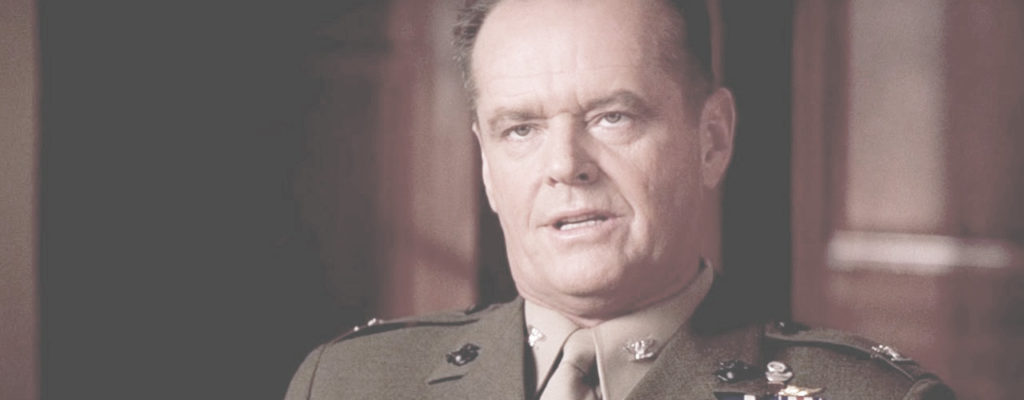
The psychological climate in which you work has a lot to do with your health and happiness. Recent research has found, perhaps not surprisingly, that bad bosses can affect how your whole family relates to one another. They can also affect your physical health, raising your risk for heart disease.
Now, new research illustrates how bad bosses can shoot themselves in the foot, hindering their employees’ morale, rather than helping it.
Over 1,100 employees at companies of all sizes were questioned about their work environments and their overall well-being. Some questions aimed at gauging the level of involvement the participants felt and at determining their bosses’ management styles. Participants rated statements like “my supervisor consults with me to find out what modifications I would like to make to my work” and “my supervisor tries to motivate me by making me feel guilty for not doing enough.” Some statements, such as “the organization shows very little concern for me,” measured the support the participants felt their companies provided.
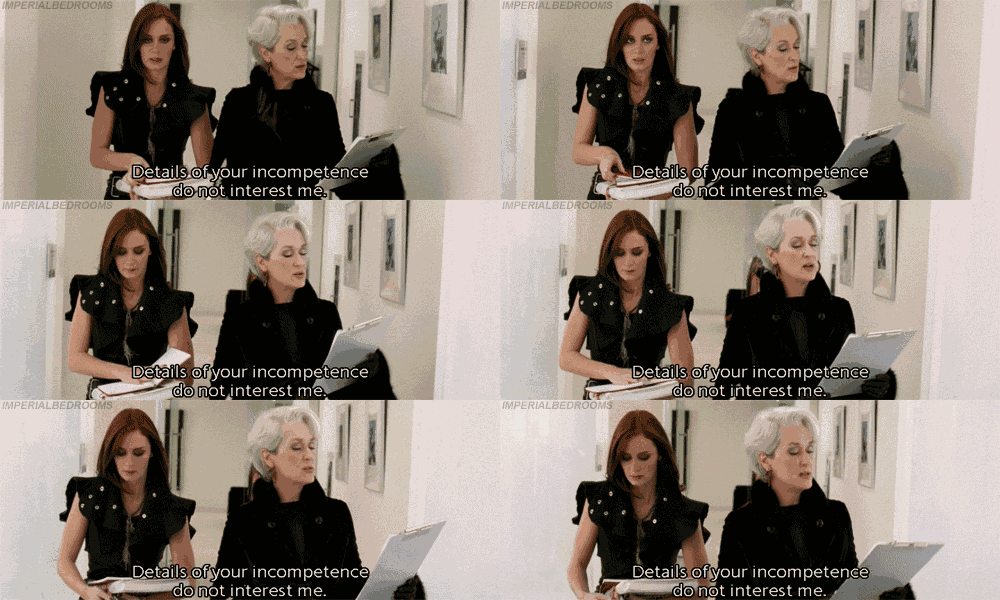
The more negative the bosses’ management style, the less happy the workers — not a surprising finding. When bosses were controlling rather than encouraging, employee well-being was low. On the other hand, when employees felt that their autonomy was encouraged (for example, when bosses gave a “meaningful rationale for doing the tasks” and made employees feel they were being asked to contribute rather than commanded to do something), they also had better overall well-being.The psychological climate of the organization itself also affected participants’ happiness: The more supportive the company, the happier the employee.
Some of the findings in the study are intuitive: Most people can tell you that a bad boss can seriously affect one’s work experience and overall happiness. But pinpointing the relationship in a scientific study is tricky. For example, it is not clear how and to what degree employees’ on-the-job performance affected their bosses’ behavior. Hopefully, as more studies support the connection, more companies will come to realize how much the attitudes of their supervisors can affect the well-being — and, likely, productivity — of their workers.The study was carried out at the Université Francois Rabelais, and published in the Journal of Business and Psychology.
This article originally appeared on TheDoctorWillSeeYouNow.com No copyright infringement intended.

Feeling like you’re part of the gang is crucial to the human experience. All people get stressed out when we’re left out. A new study published in Psychological Science, a journal of the Association for Psychological Science, finds that a feeling of inclusion can come from something as simple as eye contact from a stranger.Psychologists already know that humans have to feel connected to each other to be happy. A knitting circle, a church choir, or a friendly neighbor can all feed that need for connection. Eric D. Wesselmann of Purdue University wanted to know just how small a cue could help someone feel connected. He cowrote the study with Florencia D. Cardoso of the Universidad Nacional de Mar del Plata in Argentina, Samantha Slater of Ohio University, and Kipling D. Williams of Purdue. “Some of my coauthors have found, for example, that people have reported that they felt bothered sometimes even when a stranger hasn’t acknowledged them,” Wesselmann says. He and his authors came up with an experiment to test that.
The study was carried out with the cooperation of people on campus at Purdue University. A research assistant walked along a well-populated path, picked a subject, and either met that person’s eyes, met their eyes and smiled, or looked in the direction of the person’s eyes, but past them – past an ear, for example, “looking at them as if they were air,” Wesselmann says. When the assistant had passed the person, he or she gave a thumbs-up behind the back to indicate that another experimenter should stop that person. The second experimenter asked, “Within the last minute, how disconnected do you feel from others?”
People who had gotten eye contact from the research assistant, with or without a smile, felt less disconnected than people who had been looked at as if they weren’t there.
“These are people that you don’t know, just walking by you, but them looking at you or giving you the air gaze – looking through you – seemed to have at least momentary effect,” Wesselmann says. Other research has found that even being ostracized by a group you want nothing to do with, like the Ku Klux Klan, can make people feel left out, so it’s not surprising that being pointedly ignored can have the same effect. “What we find so interesting about this is that now we can further speak to the power of human social connection,” Wesselmann says. “It seems to be a very strong phenomenon.”
—
Association for Psychological Science. “Feeling Left Out? Being Ignored Hurts, Even By A Stranger.“ Medical News Today. MediLexicon, Intl., 27 Jan. 2012. Web.
27 Jan. 2012.

![Wat zijn betere leiders: narcisten of junkies? [Engels]](https://www.fernweh.nu/wp-content/uploads/2012/01/Narcist-of-junkie-witte-pauw-1024x400.jpg)
Narcissists rise to the top. That’s because other people think their qualities—confidence, dominance, authority, and self-esteem—make them good leaders.
Is that true? “Our research shows that the opposite seems to be true,” says Barbora Nevicka, a PhD candidate in organizational psychology, describing a new study she undertook with University of Amsterdam colleagues Femke Ten Velden, Annebel De Hoogh, and Annelies Van Vianen. The study found that the narcissists’ preoccupation with their own brilliance inhibits a crucial element of successful group decision-making and performance: the free and creative exchange of information and ideas. The findings will be published in an upcoming issue of Psychological Science, a journal of the Association for Psychological Science.
Source: APA
According to David J. Linden, professor of neuroscience at Johns Hopkins University School of Medicine and the author of “The Compass of Pleasure: How Our Brains Make Fatty Foods, Orgasm, Exercise, Marijuana, Generosity, Vodka, Learning, and Gambling Feel So Good“, junkies might:
When we think of the qualities we seek in visionary leaders, we think of intelligence, creativity, wisdom and charisma, but also the drive to succeed, a hunger for innovation, a willingness to challenge established ideas and practices.
But in fact, the psychological profile of a compelling leader — think of tech pioneers like Jeff Bezos, Larry Ellison and Steven P. Jobs — is also that of the compulsive risk-taker, someone with a high degree of novelty-seeking behavior. In short, what we seek in leaders is often the same kind of personality type that is found in addicts, whether they are dependent on gambling, alcohol, sex or drugs.
And:
So why do some people become addicted to drugs, alcohol, gambling or sex while others can indulge in a moderate, noncompulsive manner? One hypothesis is that addicts feel those pleasures unusually strongly and are motivated to seek them more intently. It’s reasonable, but wrong. Evidence from animal experiments and human brain scans indicates that the opposite is true: Addicts want their pleasures more but like them less.
And:
The risk-taking, novelty-seeking and obsessive personality traits often found in addicts can be harnessed to make them very effective in the workplace. For many leaders, it’s not the case that they succeed in spite of their addiction; rather, the same brain wiring and chemistry that make them addicts also confer on them behavioral traits that serve them well.
So, when searching for your organization’s next leader, look for someone with an attenuated dopamine function: someone who is never satisfied with the status quo, someone who wants the feeling of success more than others — but likes it less.
Source: NYT – Bakedsuyo | No copyright infringement intended.

Dit is een fragment uit Sonja Lyubomirsky’s interessante boek, The How of Happiness, dat ingaat op het hierboven beschreven verschijnsel:
“…one study, adult workers were given pagers that beeped them at preprogrammed intervals as they went about their days. Each page was a signal to the participants to consider their at that very moment and to complete several rating scales—that is, how much were they concentrating, did they want to continue what they were doing, and how happy, strong, and creative they were feeling. Interestingly, though perhaps not surprisingly, the study found that while at work (relative to home/leisure), these individuals spent a great deal more time in high-challenge, high-skill situations (that is, those situations that foster flow) and less time in low-skill, low-challenge situations. Indeed, they were inclined to experience a sense of efficacy and self-confidence during work hours but to experience apathy at home. However, when probed about what they’d rather be doing, these participants uniformly stated that they’d rather be doing something else when working and that they preferred to continue what they were doing when at leisure.“
Source: https://www.bakadesuyo.com/do-we-have-more-fun-at-work-or-at-home