• Spring naar de hoofdnavigatie
  • Door naar de hoofd inhoud

Fernweh Magazine

Ontsnap. Steeds vaker. En verder..!

  • Actueel
  • Cultuur
  • Artikelen & Interviews
  • Colofon
  • Winkelmand

Artikelen & Interviews

Wat zijn betere leiders: narcisten of junkies? [Engels]

Wat zijn betere leiders: narcisten of junkies? [Engels]

by J. Stevens · jan 22, 2012

Do Narcissists or Junkies Make Better Leaders?
– Written by: Eric Barker

Narcissists don’t:

Narcissists rise to the top. That’s because other people think their qualities—confidence, dominance, authority, and self-esteem—make them good leaders.

Is that true? “Our research shows that the opposite seems to be true,” says Barbora Nevicka, a PhD candidate in organizational psychology, describing a new study she undertook with University of Amsterdam colleagues Femke Ten Velden, Annebel De Hoogh, and Annelies Van Vianen. The study found that the narcissists’ preoccupation with their own brilliance inhibits a crucial element of successful group decision-making and performance: the free and creative exchange of information and ideas. The findings will be published in an upcoming issue of Psychological Science, a journal of the Association for Psychological Science.

Source: APA

According to David J. Linden, professor of neuroscience at Johns Hopkins University School of Medicine and the author of “The Compass of Pleasure: How Our Brains Make Fatty Foods, Orgasm, Exercise, Marijuana, Generosity, Vodka, Learning, and Gambling Feel So Good“, junkies might:

When we think of the qualities we seek in visionary leaders, we think of intelligence, creativity, wisdom and charisma, but also the drive to succeed, a hunger for innovation, a willingness to challenge established ideas and practices.

But in fact, the psychological profile of a compelling leader — think of tech pioneers like Jeff Bezos, Larry Ellison and Steven P. Jobs — is also that of the compulsive risk-taker, someone with a high degree of novelty-seeking behavior.  In short, what we seek in leaders is often the same kind of personality type that is found in addicts, whether they are dependent on gambling, alcohol, sex or drugs. 


And:

So why do some people become addicted to drugs, alcohol, gambling or sex while others can indulge in a moderate, noncompulsive manner? One hypothesis is that addicts feel those pleasures unusually strongly and are motivated to seek them more intently. It’s reasonable, but wrong. Evidence from animal experiments and human brain scans indicates that the opposite is true:  Addicts want their pleasures more but like them less. 


And:


The risk-taking, novelty-seeking and obsessive personality traits often found in addicts can be harnessed to make them very effective in the workplace. For many leaders, it’s not the case that they succeed in spite of their addiction; rather, the same brain wiring and chemistry that make them addicts also confer on them behavioral traits that serve them well.

So, when searching for your organization’s next leader, look for someone with an attenuated dopamine function: someone who is never satisfied with the status quo, someone who wants the feeling of success more than others — but likes it less.

Source: NYT – Bakedsuyo | No copyright infringement intended.

 

Categorie: artikelen derden, diversen, Uncategorized

Waar hebben we meer ‘fun’: thuis of op het werk?

Waar hebben we meer ‘fun’: thuis of op het werk?

by J. Stevens · jan 22, 2012

We brengen veel tijd door op ons werk. Een niet gering deel van die tijd worden we flink uitgedaagd om klussen te klaren waarvoor de maximale inzet van onze vaardigheden en vakmanschap essentieel is. Daardoor bevinden we ons al snel in een staat van ‘FLOW’ gedurende die werkzaamheden. Als we thuis zijn, in onze vrije tijd, voelen we ons veel eerder apathisch dan in flow.

Dit is een fragment uit Sonja Lyubomirsky’s interessante boek, The How of Happiness, dat ingaat op het hierboven beschreven verschijnsel:

“…one study, adult workers were given pagers that beeped them at preprogrammed intervals as they went about their days. Each page was a signal to the participants to consider their at that very moment and to complete several rating scales—that is, how much were they concentrating, did they want to continue what they were doing, and how happy, strong, and creative they were feeling. Interestingly, though perhaps not surprisingly, the study found that while at work (relative to home/leisure), these individuals spent a great deal more time in high-challenge, high-skill situations (that is, those situations that foster flow) and less time in low-skill, low-challenge situations. Indeed, they were inclined to experience a sense of efficacy and self-confidence during work hours but to experience apathy at home. However, when probed about what they’d rather be doing, these participants uniformly stated that they’d rather be doing something else when working and that they preferred to continue what they were doing when at leisure.“


Source: https://www.bakadesuyo.com/do-we-have-more-fun-at-work-or-at-home


Categorie: artikelen derden, diversen, Uncategorized

Ook zonder regels gedragen mensen zich sociaal en ‘goed’

Ook zonder regels gedragen mensen zich sociaal en ‘goed’

by J. Stevens · jan 17, 2012

Ook als er geen regels zijn, zijn mensen sociaal en eerder meelevend en aardig dan agressief, zo blijkt.

De onderzoekers baseren hun conclusie op een experiment waaraan meer dan 400.000 mensen deelnamen. De proefpersonen speelden het spel Pardus. Pardus is een virtuele wereld waarin de proefpersonen hun avatar kunnen laten communiceren, slapen, bewegen, contacten laten leggen enzovoort. In het spel zijn geen regels.

Geen anarchie
U zou denken: dat wordt toch een zooitje? Maar het tegendeel is waar, zo moeten de onderzoekers van de universiteit van Wenen concluderen. Van anarchie is absoluut geen sprake. De deelnemers organiseren zichzelf als een sociale groep met een goede wil, vertelt onderzoeker Stefan Thurner. Vrijwel alle acties zijn positief.
Negatief
Dat verandert echter wanneer de mensen in het spel zelf met een negatieve situatie te maken kregen. Wanneer ze bijvoorbeeld met agressie te maken kregen, groeide de kans dat ook zij zelf agressief zouden worden, sterk. Die kans vertienvoudigde in rap tempo en kon wel oplopen toto 30 procent.
Representatief
Maar is zo’n virtuele wereld nu representatief voor de echte wereld? In andere woorden: zouden echte mensen zich ondanks het feit dat er geen regels zijn ook zo gedragen? De onderzoekers denken dat de situatie wel naar het echte leven te vertalen is. Zo zijn er diverse aspecten die virtueel en in het echte leven hetzelfde zijn gebleken. Zo hebben de mensen in de virtuele wereld niet meer dan 150 vrienden. Dat geldt ook voor de echte wereld.
De onderzoekers hebben hun resultaten gepubliceerd in het blad PLoS ONE. Ze hopen dankzij het onderzoek een beter beeld te krijgen van samenlevingen en veranderingen daarin. 

WETENSCHAPPELIJKE BRON:
“Menschen verhalten sich auch ohne Regeln sozial und ???gut???” – Meduniwien.ac 

DIRECTE BRON:
De bovenstaande tekst is geschreven door: Caroline Hoek op 17 januari 2012 om 19:51 uur
Voor: Scientas. Zie: https://www.scientias.nl/ook-zonder-regels-gedragen-we-ons/53852 

—– 

VERDER LEZEN? – LEES DAN MIJN COLUMN:
‘Leidinggeven? Niet doen!’ https://www.organisatieactivist.nl/www/leidinggeven-niet-doen/ 

Categorie: artikelen derden, Uncategorized

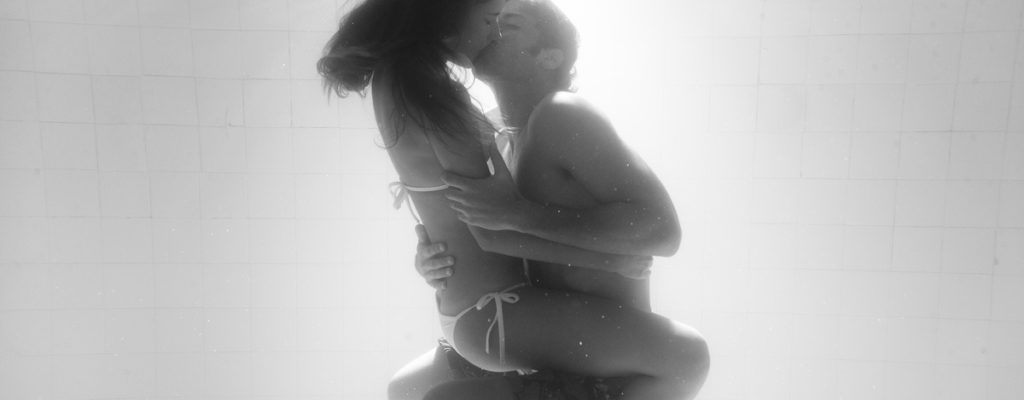
Wie zegt het eerst ‘Ik hou van je’: mannen of vrouwen?

Wie zegt het eerst ‘Ik hou van je’: mannen of vrouwen?

by J. Stevens · jan 15, 2012

Are men or women more likely to confess love first in romantic relationships? And how do men and women feel when their partners say “I love you”? An evolutionary–economics perspective contends that women and men incur different potential costs and gain different potential benefits from confessing love. Across 6 studies testing current and former romantic relationships, we found that although people think that women are the first to confess love and feel happier when they receive such confessions, it is actually men who confess love first and feel happier when receiving confessions. Consistent with predictions from our model, additional studies have shown that men’s and women’s reactions to love confessions differ in important ways depending on whether the couple has engaged in sexual activity. These studies have demonstrated that saying and hearing “I love you” has different meanings depending on who is doing the confessing and when the confession is being made. Beyond romantic relationships, an evolutionary–economics perspective suggests that displays of commitment in other types of relationships—and reactions to these displays—will be influenced by specific, functional biases.


Source: “Let’s get serious: Communicating commitment in romantic relationships.” from Journal of Personality and Social Psychology, Feb 14, 2011
The text above was taken from: https://www.bakadesuyo.com/who-says-i-love-you-first-men-or-women
– No copyright infringement intended. 
Categorie: artikelen derden, Uncategorized

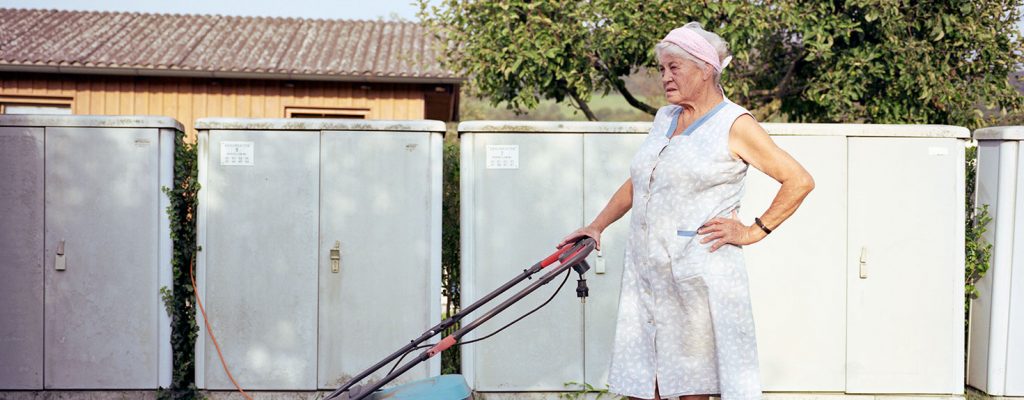
Waarom zijn ouderen gelukkiger?

Waarom zijn ouderen gelukkiger?

by J. Stevens · jan 7, 2012

Why Are Older People Happier?

Older people tend to be happier. But why? Some psychologists believe that cognitive processes are responsible — in particular, focusing on and remembering positive events and leaving behind negative ones; those processes, they think, help older people regulate their emotions, letting them view life in a sunnier light. “There is a lot of good theory about this age difference in happiness,” says psychologist Derek M. Isaacowitz of Northeastern University, “but much of the research does not provide direct evidence” of the links between such phenomena and actual happiness.

In a new article in Perspectives on Psychological Science, a journal published by the Association for Psychological Science, Isaacowitz and the late Fredda Blanchard-Fields of Georgia Institute of Technology argue for more rigorous research.

Researchers, including the authors, have found that older people shown pictures of faces or situations tend to focus on and remember the happier ones more and the negative ones less. Other studies have discovered that as people age, they seek out situations that will lift their moods — for instance, pruning social circles of friends or acquaintances who might bring them down. Still other work finds that older adults learn to let go of loss and disappointment over unachieved goals, and hew their goals toward greater wellbeing.

What’s missing, say the authors, are consistently demonstrated direct links between these strategies and phenomena and changes of mood for the better. One reason, Isaacowitz suggests, is that lab tests yield results that are not straightforward. “When we try to use those cognitive processes to predict change of mood, they don’t always do so,” he explains. “Sometimes looking at positive pictures doesn’t make people feel better.” A closer review of the literature also reveals contradictions. Some people — younger ones, for instance — may make themselves feel better by accentuating the negative in others’ situations or characteristics. And whereas some psychologists find that high scores on certain cognitive tests correlate in older people with the ability to keep their spirits up, other researchers hypothesize that happiness in later life is an effect of cognitive losses — which force older people to concentrate on simpler, happier thoughts.

More rigorous methods probably won’t overthrow the current theories, says Isaacowitz, but they will complicate the picture. “It won’t be as easy to say old people are happier. But even if they are happier on average, we still want to know in what situations does this particular strategy make this particular person with these particular qualities or strengths feel good.”


Bron / source

Categorie: artikelen derden, Uncategorized

Uw congres / bijeenkomst gemakkelijk mooi interactief maken (2.0)?

Uw congres / bijeenkomst gemakkelijk mooi interactief maken (2.0)?

by J. Stevens · jan 7, 2012

Organiseert u weleens een congres, symposium of bijeenkomst? Dan is dit een tip voor u!

Benodigdheden:

– stopcontact
– 1 compu
– 1 beamer
– scherm of een witte muur


Er is nu een site waar u makkelijk een twitteraccount kunt intypen: @voorbeeld of een hashtag: #voorbeeldCongres De site zorgt er dan voor dat alle tweets die daarmee te maken hebben op een visueel aantrekkelijke wijze, één voor één in beeld komen (verschillende animaties zijn zelf door u in te stellen) worden. U kunt de site met een beamer op een scherm projecteren zodat de congresgangers kunnen zien wat andere congresgangers tweeten. Wellicht nodigt de site zelfs uit om zoveel te twitteren dat uw congres zelfs ’trending topic’ wordt.


Er is ook een visuele instelling mogelijk waarbij de site van alle tweets een ’tagcloud’ maakt. Woorden die vaak getweet worden, komen dan groter in beeld in de ‘woordwolk’ dan andere woorden. Zo zien de congresgangers dat spreker ‘Piet’ populair is en dat het woord ‘gezondheid’ kennelijk een belangrijk thema gevonden wordt.

Hoe heet deze leuke nieuwe site?

VisibleTweets.com
Een vergelijkbare site die al langer bestaat, is bijvoorbeeld:
TwitterFountain.com
Veel plezier ermee!

[Disclaimer: Fernweh Magazine heeft geen enkel (financieel) belang bij genoemde sites]

Categorie: Artikelen, Uncategorized

No, You Can’t Pick My Brain – It Costs Too Much

No, You Can’t Pick My Brain – It Costs Too Much

by J. Stevens · jan 5, 2012

I love giving advice. I write blogs, articles and a newsletter. I host a radio show. I tweet, Facebook and share nuggets of advice almost daily. So what is it in all of that, that would make anyone think they can still have the right to ‘pick my brain’.
I can’t tell you how flattering it is to be approached by representatives from major companies seeking my wisdom and advice. It shows they are listening, and like what I have to say.
But often I find the road ends when they are just on a fact finding mission. That mission is to pick my brain to gather as much free intel and knowledge they need to make their jobs easier.
Not gonna happen, sorry. My brain costs money to maintain. There’s training, classes to attend, reading (I have to buy books), gaining certifications, costs of memberships so I can network, attending conferences and mastering my skills that all cost me money.
I have to protect my investment. How fair is it to me to give away all the knowledge I have acquired that I use to make my living, pay my bills and eat?
Now, don’t get offended. If you do, maybe you deserve to be offended because you’re one of those aforementioned brain pickers.
There have been many articles written and discussions formed around this very subject. With the Internet being so widely available loaded with free information, people automatically assume that you too have to provide information for free.
My response to that is go ahead and read the free stuff. But when you still find yourself lacking answers, then apparently the FREE stuff doesn’t work. You can’t come to a professional and ask them to work for free. In essence, that is what you’re doing when you ask to pick someone’s brain.
How would you feel if your boss came to you and said, Hey since we can get this done from information from the Internet, I won’t be paying you today. Go ahead, let it sink in. Got that visual yet? Good. That’s exactly how I feel whenever someone wants to take me to lunch or call me to pick my brain.
If you’re like (how I used to be) you’ve given away tons of valuable information. I never once minded helping people out. It’s the ones who keep coming back for more freebies and those who take my ideas, implement them, find success, then never offer to repay me for my time.
And no, a turkey sandwich is not payment for something that helped you overcome an obstacle and either created value or additional revenue for your company. I charge my paying clients very good money for my expertise and results. How would they feel to know that I’m giving out free advice? Not too swell I would imagine. In fact I hope they don’t call me demanding refunds!
The most prevalent question I get is how do you draw the line? Deciding the point where you begin to charge is tough, especially if you’re just starting out.
But your knowledge has value. You’ve invested time and money into learning your craft and it’s not fair for people to expect you to give it away for free. Even friends need to understand there are boundaries.
For example I will no longer advise my friends or family for free. (Wow, I just made some people mad. They’ll get over it!). I have businesses to run, employees to pay, a mortgage to pay, an office rent to pay, college tuition, etc, etc, etc.
I’ve told this to friends who have promptly replied, Me too, you know I don’t have much money. SO WHAT. That means you either have to delay your plans or come up with the money to fund your dreams. Period. Giving away information is the quickest way to end up evicted or foreclosed on. Put that in proper perspective for a moment.
If you’re having problem drawing the line in the sand, here are some rules of thumb you should follow:
  • Believe that what you know is valuable. If it wasn’t then why are they coming to you? You’re their chance to solve a problem or find a solution. That has value. Charge for it.
  • Create a fee schedule. Whenever someone wants to pick your brain, make sure you have your fee schedule in front of you. Give them a quote for how much it will cost them. They’ll either pay it or move on. If they move on, good riddance. They weren’t interested in paying you anyway. Let them figure it out on their own.
  • Decline lunch/coffee invitations unless they are strictly non-business. If the conversation swings around to business, quickly and politely tell them you’re off the clock. If they are interested in a consult they can book an appointment and let them know what the charge is for that.
  • Keep it light. Some of you will probably cave and throw a few nuggets out there. If you do (I hope you don’t), keep it general. Give the why and what but never the how. Anything beyond the why and what comes with a charge. And don’t even point them in the direction to obtain the how. That’s short changing yourself.
  • Prominently post that there are no freebies. OK not in those words. But if you have a blog or website, and even on your social media profiles, make sure you mention that consultations are available at a fee.
  • Exchange for equal value. This puts you in an advantageous bargaining position. If someone requests free information or help, you must feel comfortable in asking for an in kind value service. Assess what they have that can be of equal benefit for you. If they are genuine, they should have no problem in an even exchange of knowledge. Only you will know if what they have is equal to what you’re giving.
  • Refer them to your ‘free’ resources. If you write a blog, have published articles, have archived videos or podcasts or have a show in which you dispense advice, refer them to that information. Explain that those are the only free information sources you offer. Anything specific or beyond what’s readily available has a cost.
  • Don’t be afraid to send them to Google. You can recommend they go to Google, or any other search engine or to sites that have articles or information about what they need advice on. You can also recommend a book or magazine that might be helpful. Let them expend that energy they would have used in meeting you at Starbucks and hit the search engines to find their answers. Problem is, they’ll be overwhelmed with varying degrees of information. Not fun for them, but when they’re ready to put it in proper perspective and implement, they can come to you ‘for a consult’ a paid consult.
  • Ask them for a paying referral. If they truly want your expertise, they have to be willing to help you out too. It’s kind of like the Equal Exchange point I made above crossed with paying it forward. Before you dispense any advice, ask them to provide you with referrals to others who most certainly need (and can afford) your service.
  • Don’t back down. I know it’s hard to say ‘no’ sometimes. But you can’t back down. People will know how far they can bend or push you. Stand firm, set your boundaries and guard your treasures (your brain and the know how in it). The minute you compromise you devalue yourself and your expertise.

Most people are afraid to draw the hard lines in the sand for fear of angering a friend or losing a potential client or opportunity. Trust me, if they will walk away because they cannot get a freebie, they weren’t meant to be a client and there was no real opportunity in it for you.

Many in the marketing circles will tell you the freebie give away is vital. But it doesn’t always lead to a sale. Likewise giving away what you would do in a given situation during an interview will not necessarily lead to you being hired. It’s up to you to determine what you’re willing to give away and how much of it. Know your worth, understand your value. Stop being taken advantage of. No more freebies.

Til next time.


Adrienne Graham
No, you can’t pick my brain!
Stay tuned for the release of my new book Get Recruited: Secrets from a Top Recruiter to Use Unconventional Tactics to Get Noticed in an Inconvenient Economy.

SOURCE

Original article can be found here: https://www.forbes.com/sites/work-in-progress/2011/03/28/no-you-cant-pick-my-brain-it-costs-too-much/

Categorie: artikelen derden, Uncategorized

  • « Ga naar Vorige pagina
  • Pagina 1
  • Interim pagina's zijn weggelaten …
  • Pagina 10
  • Pagina 11
  • Pagina 12
  • Pagina 13
  • Pagina 14
  • Interim pagina's zijn weggelaten …
  • Pagina 23
  • Ga naar Volgende pagina »

Copyright © 2026 Fernweh Magazine · Log in

  • Home
  • Winkel
  • Winkelmand
  • Mijn account
  • Inschrijven voor de nieuwsbrief
  • Cookiebeleid (EU)
Wij gebruiken cookies

Cookies helpen ons om de site goed te laten werken en om te begrijpen hoe bezoekers Fernweh.nu gebruiken. Kies zelf welke cookies je toestaat.

Functioneel Altijd actief
Deze cookies zijn nodig om de website goed te laten werken (bijv. voorkeuren / veilige login).
Voorkeuren
De technische opslag of toegang is noodzakelijk voor het legitieme doel voorkeuren op te slaan die niet door de abonnee of gebruiker zijn aangevraagd.
Statistieken
De technische opslag of toegang die uitsluitend voor statistische doeleinden wordt gebruikt. Deze anonieme gegevens helpen ons om de ervaring van je websitebezoek te kunnen verbeteren.
Marketing
Met deze cookies tonen we partnerlinks en inhoud die past bij onze verhalen en de interesses van bezoekers.
  • Beheer opties
  • Beheer diensten
  • Beheer {vendor_count} leveranciers
  • Lees meer over deze doeleinden
Bekijk voorkeuren
  • {title}
  • {title}
  • {title}