• Spring naar de hoofdnavigatie
  • Door naar de hoofd inhoud

Fernweh Magazine

Ontsnap. Steeds vaker. En verder..!

  • Actueel
  • Cultuur
  • Artikelen & Interviews
  • Colofon
  • Winkelmand

Artikelen & Interviews

Onderzoek: Bescheiden mensen zijn behulpzamer

Onderzoek: Bescheiden mensen zijn behulpzamer

by J. Stevens · jan 4, 2012

The Trait Of Humility Predicts Helpfulness
Written by: Rupert Shepherd B.Sc

An article published in The Journal of Positive Psychology has researchers suggesting that humble people are more likely to be helpful than those with less humility.

Lead author Jordan LaBouff, Ph.D., a lecturer in psychology at the University of Maine said:

“The findings are surprising because in nearly 30 years of research on helping behavior, very few studies have shown any effect of personality variables on helping … The only other personality trait that has shown any effect is agreeableness, but we found that humility predicted helping over and above that.”


Wade Rowatt Ph.D. professor of neuroscience at Baylor University, who led and co-authored the study, said that a decision to help someone out, was mainly influenced by circumstantial issues, such as time pressure, number of bystanders, momentary feelings of empathy, or a person’s own distress. 

The research was carried out with three studies of college students. First the student were asked to evaluate themselves, and those that reported being humble also reported being more helpful. The researchers statistically controlled other factors such as agreeableness to balance the results. 

However people are prone to exaggerate and over or under report their own personal traits. So the later research attempted to balance out this problem in the data collection. The second study had the students listen to a recording that was later meant for broadcast on the campus radio station. It recited the story of a student with a leg injury who was unable to attend class regularly. Students were asked how many hours over the next few weeks they could meet with the student to give him assistance. Those that reported being humble generally offered more time than the less humble. 

The last study used key words and association in quick succession to have the students analyze themselves. Stimulus words in the humble section included modest, tolerant, down to earth, respectful, and open-minded. Stimulus words in the arrogance portion included immodest, egotistical and conceited. 

Rowatt concluded that: 

“Our discovery here is that the understudied trait of humility predicts helpfulness … Important next steps will be to figure out whether humility can be cultivated and if humility is beneficial in other contexts, such as scientific and medical advancements or leadership development.” (laatste twee woorden door mij vetgedrukt, JS)

Source: https://www.medicalnewstoday.com/articles/239823.php


Original Source: “Humble persons are more helpful than less humble persons: Evidence from three studies” The Journal of Positive Psychology, DOI: 10.1080/17439760.2011.626787


MLA

Rupert Shepherd B.Sc. “The Trait Of Humility Predicts Helpfulness.” Medical News Today. MediLexicon, Intl., 3 Jan. 2012. Web.
3 Jan. 2012. https://www.medicalnewstoday.com/articles/239823.php

APA

Rupert Shepherd B.Sc. (2012, January 3). “The Trait Of Humility Predicts Helpfulness.” Medical News Today. Retrieved from
https://www.medicalnewstoday.com/articles/239823.php. 

Categorie: artikelen derden, Uncategorized

Ex-bankier: ‘Ons werd ingeprent: het gaat om de bonussen!’

Ex-bankier: ‘Ons werd ingeprent: het gaat om de bonussen!’

by J. Stevens · dec 24, 2011

Angelique Paulissen, ‘Zakenvrouw van het Jaar’ en eigenaar van Montesquieu Finance, gevestigd aan de Avenue Céramique te Maastricht, doet vandaag in NRC Handelsblad een boekje open over de cultuur bij haar vorige werkgever ABN Amrobank. Over graaien, de landje-pikcultuur en het wegmoffelen van miljoenen.


Paulissen, die zelf als succesvol beleggingsexpert bij ABN Amro enorme bonussen opstreek:

,,Ik verdiende heel veel geld. De helft van mijn salariss bestond uit bonussen”

Zij doet nu een boekje open over diezelfde bank waar graaien heel normaal was.

,,Ik ging bij ABN Amro werken en het eerste wat je leerde was: wij zijn de beste. ING? Rabobank? Allemaal niks. Extreem was dat. En iedereen was alleen maar met zichzelf bezig. Zit jij al in schaal x? Hoe is het met jullie bonus?”

Ze verbaasde zich over de landje-pikcultuur.

,,Dan werden er drie units samengevoegd en moesten de klanten verdeeld worden. Brak er een enorm gevecht uit om de klanten die de grootste marges opleverden, want die zorgden voor de bonus.”

Ook opzienbarend in het interview in NRC zoals geciteerd op Maastricht.dichtbij.nl is de passage over de kennelijke organisatiecultuur / houding ten aanzien van de marges die klanten van ABN Amro de bank betaalden. Het gaat er medewerkers van de bank volgens Paulissen alleen maar om, om op zo kort mogelijke termijn zo veel mogelijk te verdienen aan klanten.

,,De marges werden zo verschmertz dat niemand ze zag. En dan heb ik het over miljoenen. De bonussen waren erop gebaseerd, dus iedereen deed eraan mee. Ons werd ingeprent: het gaat om de bonussen. Banken verdienen zich rot en keren de extra winsten uit als bonussen. Als het misgaat kan de overheid bijspringen. Bankiers weten niet meer wat normaal is.”

—
BRON:
Bovenstaande tekst is grotendeels overgenomen van: https://maastricht.dichtbij.nl/stad/maastrichtse-zakenvrouw-graaien-gifpijlen  
Bovenstaande website zegt zicht te baseren op een interview met Paulissen in NRC Handelsblad.
Foto: Clive Limpkin. Toegevoegd door Fernweh Magazine

Categorie: artikelen derden, Uncategorized

Waarom luistert je baas niet naar je? | Advice Taking: Why the Powerful Don’t Listen

Waarom luistert je baas niet naar je? | Advice Taking: Why the Powerful Don’t Listen

by J. Stevens · dec 24, 2011

Waarom besteedt je baas geen aandacht aan wat je hem adviseert?

Omdat mensen die zich erg machtig voelen naar niemand luisteren:

“Four experiments test the prediction that feelings of power lead individuals to discount advice received from both experts and novices.

Experiment 1 documents a negative relationship between subjective feelings of power and use of advice.

Experiments 2 and 3 further show that individuals experiencing neutral and low levels of power weigh advice from experts and experienced advisors more heavily than advice from novices, but individuals experiencing high levels of power discount both novice and expert advice.

Experiments 3 and 4 demonstrate that this tendency of individuals experiencing high levels of power to discount advice from experts and novices equally is mediated by feelings of competitiveness (Experiment 3) and confidence (Experiments 3 and 4).

Finally, Experiment 4 shows that inducing high-power individuals to feel cooperative with their advisors can mitigate this tendency, leading them to weigh expert advice more heavily than advice from novices. Theoretical and practical contributions are discussed.“


Sources:

  • “Power, Competitiveness, and Advice Taking: Why the Powerful Don’t Listen” from L.P. Tost, F. Gino, and R. Larrick, Organizational Behavior and Human Decision Processes (forthcoming)
  • https://www.bakadesuyo.com/
  • Picture on top of the page => Woodcut titled: ‘Hear Grass Grow’. Manufacturer: Katerina Coufalova Woodcut-picture for sale at: https://www.grafiekart.com/index.php?route=product/product&product_id=78


Categorie: artikelen derden, Uncategorized

Lower Classes Quicker To Show Compassion In The Face Of Suffering

Lower Classes Quicker To Show Compassion In The Face Of Suffering

by J. Stevens · dec 23, 2011

Emotional differences between the rich and poor, as depicted in such Charles Dickens classics as “A Christmas Carol” and “A Tale of Two Cities,” may have a scientific basis. Researchers at the University of California, Berkeley, have found that people in the lower socio-economic classes are more physiologically attuned to suffering, and quicker to express compassion than their more affluent counterparts.

By comparison, the UC Berkeley study found that individuals in the upper middle and upper classes were less able to detect and respond to the distress signals of others. Overall, the results indicate that socio-economic status correlates with the level of empathy and compassion that people show in the face of emotionally charged situations.”It’s not that the upper classes are coldhearted,” said UC Berkeley social psychologist Jennifer Stellar, lead author of the study published online on Dec. 12 in the journal, Emotion. “They may just not be as adept at recognizing the cues and signals of suffering because they haven’t had to deal with as many obstacles in their lives.”

Stellar and her colleagues’ findings challenge previous studies that have characterized lower-class people as being more prone to anxiety and hostility in the face of adversity.

“These latest results indicate that there’s a culture of compassion and cooperation among lower-class individuals that may be born out of threats to their wellbeing,” Stellar said.

It has not escaped the researchers’ attention that the findings come at a time of rising class tension, expressed in the Occupy Wall Street Movement. Rather than widen the class divide, Stellar said she would like to see the findings promote understanding of different class cultures. For example, the findings suggest that people from lower socio-economic backgrounds may thrive better in cooperative settings than their upper-class counterparts.

“Upper-class individuals appear to be more self-focused, they’ve grown up with more freedom and autonomy,” she said. “They may do better in an individualist, competitive environment.”

More than 300 ethnically diverse young adults were recruited for the UC Berkeley study, which was divided into three experiments that used three separate groups of participants. Because all the volunteers were college undergraduates, their class identification – lower class, lower middle class, middle class, upper middle class or upper class – was based on parental income and education.

In the first experiment, 148 young adults were rated on how frequently and intensely they experience such emotions as joy, contentment, pride, love, compassion, amusement and awe. In addition, they reported how much they agreed with such statements as “When I see someone hurt or in need, I feel a powerful urge to take care of them,” and “I often notice people who need help.” Compassion was the only positive emotion reported at greater levels by lower-class participants, the study found.

In the second experiment, a new group of 64 participants viewed two videos: an instructional video on construction and an emotionally charged video about families who are coping with the challenges of having a child with cancer. Participants showed no differences while watching the “neutral” instructional video, and all reported feeling sad in response to the video about families of cancer patients. However, members of the lower class reported higher levels of compassion and empathy as distinct from sorrow.

The researchers also monitored the heart rates of participants as they watched the neutral and emotionally charged videos. Lower-class participants showed greater decreases in heart rate as they watched the cancer family video than upper-class participants.

‘[D]uring compassion, the heart rate lowers as if the body is calming itself to take care of another person.’


“One might assume that watching someone suffering would cause stress and raise the heart rate,” Stellar said. “But we have found that, during compassion, the heart rate lowers as if the body is calming itself to take care of another person.”

Finally, a new set of 106 participants was randomly divided into pairs and pitted against one another in mock interviews for a lab manager position. To further raise the stress level in interviews, those who performed best were to win a cash prize. Post-interview reports from the participants showed that the lower-class interviewees perceived their rivals to be feeling greater amounts of stress, anxiety and embarrassment and as a result reported more compassion and sympathy for their competitors. Conversely, upper-class participants were less able to detect emotional distress signals in their rivals.

“Recognizing suffering is the first step to responding compassionately. The results suggest that it’s not that upper classes don’t care, it’s that they just aren’t as good at perceiving stress or anxiety,” Stellar said.


Other coauthors of the study are UC Berkeley psychologist Dacher Keltner; Michael Kraus, a postdoctoral fellow in psychiatry at UCSF; and Vida Manzo, a researcher in social psychology at Northwestern University. The study was funded by grants from UC Berkeley’s Greater Good Science Center and the McNair Scholars Program.

Original source article: https://www.medicalnewstoday.com/releases/239554.php

Categorie: artikelen derden, Uncategorized

‘Flexwerken slecht voor werknemers’

‘Flexwerken slecht voor werknemers’

by J. Stevens · dec 22, 2011

Niet alleen gaat werken als uitzendkracht of zzp’er gepaard met onzekerheid over de baan en het inkomen, ook is er schade voor de gezondheid en leidt flexwerken tot meer ongelukken op de werkvloer.


Dat blijkt uit onderzoek in opdracht van het wetenschappelijke bureau van vakcentrale FNV.

Ook voor bedrijven levert flexwerken geen duurzaam economisch voordeel op. Op de korte termijn verlaagt het flexwerken wel de arbeidskosten en wordt de positie tegenover concurrenten versterkt. Op de langere termijn leidt het echter tot minder innovatie en lagere productiviteit.

Het onderzoek is uitgevoerd door onderzoekers van de Universiteit van Amsterdam en de Universiteit van Tilburg.

—
Bron: https://www.nu.nl/werk-en-prive/2700173/flexwerken-slecht-werknemers.html
Met dank aan: twitter.com/HenkHogeweg

Categorie: artikelen derden, Uncategorized

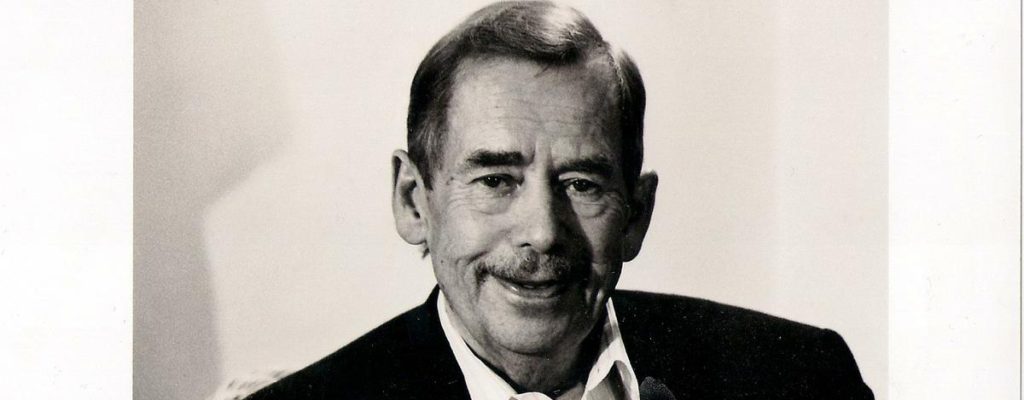
Held Havel is heengegaan – In memoriam

Held Havel is heengegaan – In memoriam

by J. Stevens · dec 18, 2011

Klassevijand
Havel werd op 5 oktober 1936 in Praag geboren als zoon van een vooraanstaand zakenman. Na de communistische machtsovername in 1948 kreeg zijn familie het stempel klassevijand opgedrukt. Havel wilde drama en kunst studeren, maar kreeg daarvoor wegens zijn ‘bourgeois’-achtergrond geen toestemming. Hij begon een studie economie.

In 1968 trad een periode van politieke dooi in waarin de regering ‘socialisme met een menselijk gezicht’ nastreefde, maar in augustus 1968 maakten de communistische bondgenoten een einde aan die Praagse Lente. Havel ontvluchtte Praag en trok zich terug op het platteland, waar hij zich in het verzet stortte tegen het regime. Hij tekende in 1977 het manifest Charta ’77, waaruit een gelijknamige beweging van dissidenten ontstond. Havel werd een van de woordvoerders.

Bijltjesdag
Het regime reageerde hard en zette talrijke ondertekenaars, onder wie ook Havel, achter de tralies. De volgende jaren verbleef hij een groot deel van de tijd in de gevangenis. De Fluwelen Revolutie maakte eind 1989 zonder bloedvergieten een einde aan ruim 40 jaar communistische dictatuur. Tegen de verwachting in kwam er geen bijltjesdag. Havel, zelf jarenlang getreiterd, achtervolgd en opgesloten, was niet uit op wraak.

Havel werd president van het vrije Tsjecho-Slowakije en bracht kleur in de samenleving, onder meer door naast staatslieden ook internationaal vermaarde artiesten als Bob Dylan en Frank Zappa uit te nodigen.

Presidential candidate Vaclav Havel waves to his supporters from a balcony in Prague in this December 19, 1989 file photo. Havel, a dissident playwright who was jailed by Communists and then went on to lead the bloodless "Velvet Revolution" and become Czech president, died at 75 on December 18, 2011. REUTERS/Petar Kujundzic/Files (CZECH REPUBLIC - Tags: POLITICS OBITUARY)
Presidential candidate Vaclav Havel waves to his supporters from a balcony in Prague in this December 19, 1989 file photo. Havel, a dissident playwright who was jailed by Communists and then went on to lead the bloodless “Velvet Revolution” and become Czech president, died at 75 on December 18, 2011. REUTERS/Petar Kujundzic/Files (CZECH REPUBLIC – Tags: POLITICS OBITUARY)


Slowakije

Zijn grootste tegenslag kwam in 1992, toen Slowakije besloot zich van Tsjechië los te maken. Het verliep zonder bloedvergieten, maar Havel zelf beschouwde de afscheiding als een nederlaag, die hij zich persoonlijk erg aantrok.Hij trad in 1992 als president af, maar werd in januari 1993 gekozen tot president van het nieuwe Tsjechië. Havels populariteit bleef onaangetast.

Havel herkende zich nooit in de heldenstatus die hem werd toegekend. ‘Men ziet mij als sterk mens, als iemand die veel weerstand heeft. Ik moet glimlachen als ik aan die reputatie denk. Want eigenlijk komen mijn moed en doorzettingsvermogen voort uit angst tegenover mijn eigen geweten dat me kwelt als ik faal of lijk te falen’, zei hij eens. Dit is ook te zien in het filmpje hieronder.


Interview (video zie hieronder)

In onderstaand interview vertelt Havel hoe hij dissident werd, over de ‘fluwelen’ revolutie (‘We hielden het regime aan hun eigen woorden, zoals die onder meer in de Grondwet stonden’) en over zijn leiderschap dat zich volgens hem kenmerkt door ‘pluralistic cooperation’ maar vooral was de revolutie mogelijk: ‘Dankzij de inspanningen van alle activisten’. Een interview:

Documentaire ‘Burger Havel’

De eerste maanden van 2008 bezochten honderdduizenden inwoners van Praag de bioscoop voor het zien van de documentaire “Oban Havel” (“Burger” of Citizen Havel, met een knipoog naar Orson Welles’ film Citizen Kane). De drie uur durende film over de dertien jaar dat Havel president was illustreert pijnlijk hoe de Tsjechische politiek na de val van het Oost-Europees communisme in snel tempo zijn onschuld verloor en wegzakte in cynische partijpolitieke en onderlinge intriges. “Burger Havel” is een uitzonderlijke documentaire, gemaakt door huisvriend Pavel Koutecký, die de president met de camera dertien jaar lang in zijn werkzame en persoonlijke leven mocht volgen, tot de slaapkamer toe. Op voorwaarde dat de beelden pas vijf jaar na afloop van Havels presidentschap voor het eerst zouden worden vertoond. Koutecký maakte het einde van zijn filmproject overigens niet meer mee, hij overleed in 2006 bij een ongeluk.

De schrijver en man-van-het-volk Havel zag de documentaire pas twee maanden na de officiële bioscooppremière, in het Praagse filmhuis Svetozor. De oud-dissident en -president vond het nog steeds moeilijk om naar zichzelf te kijken. Een oordeel over de film gaf hij niet. Aan een tafeltje in het filmhuiscafé, zo berichtten verslaggevers, “zat een broze oude man. Roken mag hij al lang niet meer van de dokter en voor zijn neus staat een glaasje whisky dat maar langzaam leger wordt. Maar het gevoel voor humor en de indrukwekkende zelfspot bij de inmiddels 71-jarige zijn nog intact.”  “Vroeg of laat word ik natuurlijk vergeten”, zei Havel bij die gelegenheid, “maar gelukkig is er nog altijd die foto waarop ik met Arnold Schwarzenegger sta”.

De schrijver-politicus met de hoge morele integriteit mopperde na afloop ook over de filmposter die speciaal voor de documentaire was gemaakt (zie plaatje hierboven). Daarop wordt de burger die vóór 1989 voortdurend werd vervolgd, gevangen zat en daarna min of meer tegen zijn zin de eerste president werd van het ‘vrije’ Tsjecho-Slowakije, afgebeeld met zijn hond en twee verschillende sokken. Havel: “Maar wat ik vooral erg vind is de man op die poster.”

Bronnen: ANP, BNO, Parool, Boek: ‘De Stille Stem’ – Jan Oegema 2011, Wikipedia NL

N.B.

  • UK Prime Minister Cameron on Havel: ‘Communism tried to crush him, and to extinguish his voice. But Havel could not be silenced. No one of my generation will ever forget those powerful scenes from Wenceslas Square. Havel led theCzech people out of tyranny.’ 
  • US President Obama on Havel: ‘His peaceful resistance shook the foundations of an empire, exposed the emptiness of a repressive ideology. Vaclav Havel was a friend to America and to all who strive for freedom and dignity, and his words will echo through the ages.’

Inmiddels heeft de New York Review of Books een herdruk gepubliceerd van het artikel: “History of a Public Enemy” (31 mei 1990) door Vaclav Havel zelf, vertaald uit het Tsjechisch door Paul Wilson.
The New York Review of Books:
“We publish here excerpts from Václav Havel’s book Disturbing the Peace, whose origins are described as follows by Paul Wilson, Havel’s translator:”

When the Czech journalist Karel Hvízdala first proposed the idea of a book-length interview to Václav Havel in 1985, Hvízdala was living in West Germany, Havel in Prague, and neither of them could visit the other. Havel liked the idea because it would give him a chance to reflect on his life as he approached fifty; he accepted. They worked on the book over the next year, communicating by underground mail. According to Hvízdala, the first approach, in which Havel sent written responses to the questions, didn’t satisfy either of them: the answers were too much like essays. So Hvízdala sent Havel a batch of about fifty questions, and between Christmas and the New Year, Havel shut himself in a borrowed flat and came out with eleven hours of recorded answers. Hvízdala transcribed and edited them, then sent the manuscript back to Havel with some supplementary questions (“for drama,” Hvízdala says). Havel prepared a final version with some new material in it, completing it in early June 1986.—P.W.

Read full story: https://www.nybooks.com/articles/archives/1990/may/31/history-of-a-public-enemy/


Categorie: Artikelen, artikelen derden, Uncategorized

‘The Fire of Life’ – een kort artikel van Richard Rorty over poezie

‘The Fire of Life’ – een kort artikel van Richard Rorty over poezie

by J. Stevens · dec 17, 2011

The Fire of Life

by Richard Rorty

In an essay called “Pragmatism and Romanticism” I tried to restate the argument of Shelley’s “Defense of Poetry.” At the heart of Romanticism, I said, was the claim that reason can only follow paths that the imagination has first broken. No words, no reasoning. No imagination, no new words. No such words, no moral or intellectual progress.
I ended that essay by contrasting the poet’s ability to give us a richer language with the philosopher’s attempt to acquire non-linguistic access to the really real. Plato’s dream of such access was itself a great poetic achievement. But by Shelley’s time, I argued, it had been dreamt out. We are now more able than Plato was to acknowledge our finitude to admit that we shall never be in touch with something greater than ourselves. We hope instead that human life here on earth will become richer as the centuries go by because the language used by our remote descendants will have more resources than ours did. Our vocabulary will stand to theirs as that of our primitive ancestors stands to ours.
In that essay, as in previous writings, I used “poetry” in an extended sense. I stretched Harold Bloom’s term “strong poet” to cover prose writers who had invented new language games for us to play; people like Plato, Newton, Marx, Darwin, and Freud as well as versifiers like Milton and Blake. These games might involve mathematical equations, or inductive arguments, or dramatic narratives, or (in the case of the versifiers) prosodic innovation. But the distinction between prose and verse was irrelevant to my philosophical purposes.

Shortly after finishing “Pragmatism and Romanticism,” I was diagnosed with inoperable pancreatic cancer. Some months after I learned the bad news, I was sitting around having coffee with my elder son and a visiting cousin. My cousin (who is a Baptist minister) asked me whether I had found my thoughts turning toward religious topics, and I said no. “Well, what about philosophy?” my son asked. “No,” I replied, neither the philosophy I had written nor that which I had read seemed to have any particular bearing on my situation. I had no quarrel with Epicurus’s argument that it is irrational to fear death, nor with Heidegger’s suggestion that ontotheology originates in an attempt to evade our mortality. But neither ataraxia (freedom from disturbance) nor Sein zum Tode (being toward death) seemed in point.

“Hasn’t anything you’ve read been of any use?” my son persisted. “Yes,” I found myself blurting out, “poetry.” “Which poems?” he asked. I quoted two old chestnuts that I had recently dredged up from memory and been oddly cheered by, the most quoted lines of Swinburne’s “Garden of Proserpine”:


We thank with brief thanksgiving
Whatever gods may be
That no life lives for ever;
That dead men rise up never;
That even the weariest river
Winds somewhere safe to sea.


and Landor’s “On His Seventy-Fifth Birthday”:

Nature I loved, and next to Nature, Art;
I warmed both hands before the fire of life,
It sinks, and I am ready to depart.


I found comfort in those slow meanders and those stuttering embers. I suspect that no comparable effect could have been produced by prose. Not just imagery, but also rhyme and rhythm were needed to do the job. In lines such as these, all three conspire to produce a degree of compression, and thus of impact, that only verse can achieve. Compared to the shaped charges contrived by versifiers, even the best prose is scattershot.Though various bits of verse have meant a great deal to me at particular moments in my life, I have never been able to write any myself (except for scribbling sonnets during dull faculty meetings a form of doodling). Nor do I keep up with the work of contemporary poets. When I do read verse, it is mostly favorites from adolescence. I suspect that my ambivalent relation to poetry, in this narrower sense, is a result of Oedipal complications produced by having had a poet for a father. (See James Rorty, Children of the Sun (Macmillan, 1926).)

However that may be, I now wish that I had spent somewhat more of my life with verse. This is not because I fear having missed out on truths that are incapable of statement in prose. There are no such truths; there is nothing about death that Swinburne and Landor knew but Epicurus and Heidegger failed to grasp. Rather, it is because I would have lived more fully if I had been able to rattle off more old chestnuts just as I would have if I had made more close friends. Cultures with richer vocabularies are more fully human farther removed from the beasts than those with poorer ones; individual men and women are more fully human when their memories are amply stocked with verses.


Richard Rorty (1931-2007) was an American philosopher best known for revitalizing the school of American pragmatism. He served as a professor emeritus of comparative literature at Stanford and was the author of several books, including Philosophy and the Mirror of Nature (Princeton University Press, 1979).


Source: Poetry Magazine https://www.poetryfoundation.org/poetrymagazine/article/180185


Categorie: artikelen derden, Uncategorized

  • « Ga naar Vorige pagina
  • Pagina 1
  • Interim pagina's zijn weggelaten …
  • Pagina 11
  • Pagina 12
  • Pagina 13
  • Pagina 14
  • Pagina 15
  • Interim pagina's zijn weggelaten …
  • Pagina 23
  • Ga naar Volgende pagina »

Copyright © 2026 Fernweh Magazine · Log in

  • Home
  • Winkel
  • Winkelmand
  • Mijn account
  • Inschrijven voor de nieuwsbrief
  • Cookiebeleid (EU)
Wij gebruiken cookies

Cookies helpen ons om de site goed te laten werken en om te begrijpen hoe bezoekers Fernweh.nu gebruiken. Kies zelf welke cookies je toestaat.

Functioneel Altijd actief
Deze cookies zijn nodig om de website goed te laten werken (bijv. voorkeuren / veilige login).
Voorkeuren
De technische opslag of toegang is noodzakelijk voor het legitieme doel voorkeuren op te slaan die niet door de abonnee of gebruiker zijn aangevraagd.
Statistieken
De technische opslag of toegang die uitsluitend voor statistische doeleinden wordt gebruikt. Deze anonieme gegevens helpen ons om de ervaring van je websitebezoek te kunnen verbeteren.
Marketing
Met deze cookies tonen we partnerlinks en inhoud die past bij onze verhalen en de interesses van bezoekers.
  • Beheer opties
  • Beheer diensten
  • Beheer {vendor_count} leveranciers
  • Lees meer over deze doeleinden
Bekijk voorkeuren
  • {title}
  • {title}
  • {title}