• Spring naar de hoofdnavigatie
  • Door naar de hoofd inhoud

Fernweh Magazine

Ontsnap. Steeds vaker. En verder..!

  • Actueel
  • Cultuur
  • Artikelen & Interviews
  • Colofon
  • Winkelmand

J. Stevens

Het jaaroverzicht der jaaroverzichten. Tafeltennis

Het jaaroverzicht der jaaroverzichten. Tafeltennis

by J. Stevens · dec 22, 2011

Dit jaaroverzicht laat alle andere jaaroverzichten verbleken. Ja, ja, de beste tafeltennisbeelden van het jaar 2011. (Ik weet het, ik heb ook niks met tafeltennis, maar dit moet je echt even zien). Weergaloze beelden die je tenminste laten grinniken:


Categorie: Uncategorized

Your Career Is a Joke (A Letter Written By a Billionaire)

Your Career Is a Joke (A Letter Written By a Billionaire)

by J. Stevens · dec 21, 2011

Your Career Is a Joke (A Letter Written By a Billionaire)


One of my favorite kind of wage slaves are careerist wage slaves, the ones who are so stupid that they take their pathetic career seriously. Your career is a joke, it does not mean anything to anyone except you. Your career is going nowhere, because at the end of the day, you are just a wage slave and an extra $500 a month will not change that. Your career is an extension of your meaningless, politically defunct, existence.
Wage slaves are conditioned by my educational institutions to imagine themselves leading a great career, but it’s all just a sick joke. Your career is nothing more than a prison sentence, in which you work to serve your rulers, your masters, me myself and I. Your career is nothing but a hard labor sentence, in which you work from 9-5 for 45 years to end up with a depressing retirement.
Revolutionaries have real careers leading to a revolt against the system, your career leads to a senior home where they change your diaper once a week. Stop being a fool wage slave, your career is a big façade, an intricate lie, you are not going anywhere. Your whole life is a joke but your career is a prison too, you’re stuck in that same cubicle, hoping to move to a slightly bigger cubicle. You’re stuck, that is the best way to characterize you wage-slave, always stuck in the mud of your dumb careerist egotism. You’re stuck in your persona of a person with a future, but it’s all a fucking joke, because to my corporation you’re nothing, not even a name.
Your career is a big joke because at any given moment you can be replaced, or tossed, or fired, or demoted. Every Friday I demote someone who works for me, it’s good for the morale of the corporation, everyone stays afraid and obedient. Your career! Ha! It’s not even really your career since your work and creativity technically belong to my corporation. Now shut your mouth wage slaves and get back to work, get back on the assembly line where your dreams get shattered before your eyes.

A Billionaire,

the one you admire, because he dictates the narrow scope of your desires 


  • Original source: https://theactivists.wordpress.com/2011/12/21/your-career-is-a-joke-a-letter-w…

Categorie: Uncategorized

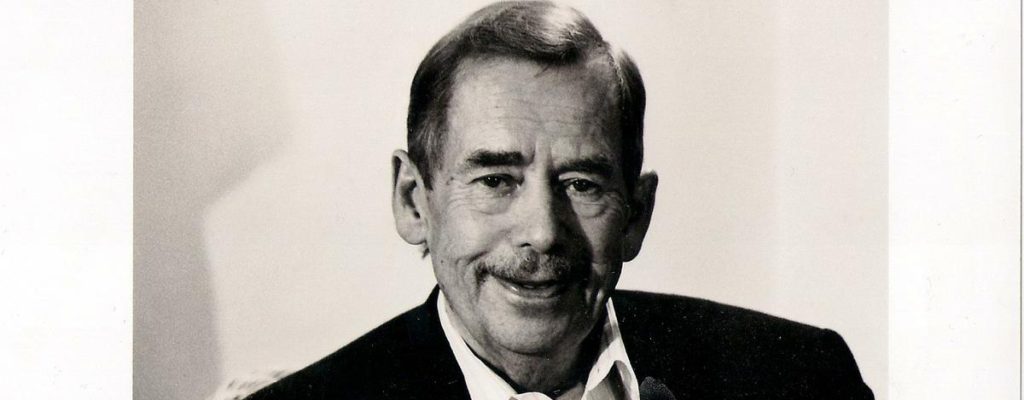
Held Havel is heengegaan – In memoriam

Held Havel is heengegaan – In memoriam

by J. Stevens · dec 18, 2011

Klassevijand
Havel werd op 5 oktober 1936 in Praag geboren als zoon van een vooraanstaand zakenman. Na de communistische machtsovername in 1948 kreeg zijn familie het stempel klassevijand opgedrukt. Havel wilde drama en kunst studeren, maar kreeg daarvoor wegens zijn ‘bourgeois’-achtergrond geen toestemming. Hij begon een studie economie.

In 1968 trad een periode van politieke dooi in waarin de regering ‘socialisme met een menselijk gezicht’ nastreefde, maar in augustus 1968 maakten de communistische bondgenoten een einde aan die Praagse Lente. Havel ontvluchtte Praag en trok zich terug op het platteland, waar hij zich in het verzet stortte tegen het regime. Hij tekende in 1977 het manifest Charta ’77, waaruit een gelijknamige beweging van dissidenten ontstond. Havel werd een van de woordvoerders.

Bijltjesdag
Het regime reageerde hard en zette talrijke ondertekenaars, onder wie ook Havel, achter de tralies. De volgende jaren verbleef hij een groot deel van de tijd in de gevangenis. De Fluwelen Revolutie maakte eind 1989 zonder bloedvergieten een einde aan ruim 40 jaar communistische dictatuur. Tegen de verwachting in kwam er geen bijltjesdag. Havel, zelf jarenlang getreiterd, achtervolgd en opgesloten, was niet uit op wraak.

Havel werd president van het vrije Tsjecho-Slowakije en bracht kleur in de samenleving, onder meer door naast staatslieden ook internationaal vermaarde artiesten als Bob Dylan en Frank Zappa uit te nodigen.

Presidential candidate Vaclav Havel waves to his supporters from a balcony in Prague in this December 19, 1989 file photo. Havel, a dissident playwright who was jailed by Communists and then went on to lead the bloodless "Velvet Revolution" and become Czech president, died at 75 on December 18, 2011. REUTERS/Petar Kujundzic/Files (CZECH REPUBLIC - Tags: POLITICS OBITUARY)
Presidential candidate Vaclav Havel waves to his supporters from a balcony in Prague in this December 19, 1989 file photo. Havel, a dissident playwright who was jailed by Communists and then went on to lead the bloodless “Velvet Revolution” and become Czech president, died at 75 on December 18, 2011. REUTERS/Petar Kujundzic/Files (CZECH REPUBLIC – Tags: POLITICS OBITUARY)


Slowakije

Zijn grootste tegenslag kwam in 1992, toen Slowakije besloot zich van Tsjechië los te maken. Het verliep zonder bloedvergieten, maar Havel zelf beschouwde de afscheiding als een nederlaag, die hij zich persoonlijk erg aantrok.Hij trad in 1992 als president af, maar werd in januari 1993 gekozen tot president van het nieuwe Tsjechië. Havels populariteit bleef onaangetast.

Havel herkende zich nooit in de heldenstatus die hem werd toegekend. ‘Men ziet mij als sterk mens, als iemand die veel weerstand heeft. Ik moet glimlachen als ik aan die reputatie denk. Want eigenlijk komen mijn moed en doorzettingsvermogen voort uit angst tegenover mijn eigen geweten dat me kwelt als ik faal of lijk te falen’, zei hij eens. Dit is ook te zien in het filmpje hieronder.


Interview (video zie hieronder)

In onderstaand interview vertelt Havel hoe hij dissident werd, over de ‘fluwelen’ revolutie (‘We hielden het regime aan hun eigen woorden, zoals die onder meer in de Grondwet stonden’) en over zijn leiderschap dat zich volgens hem kenmerkt door ‘pluralistic cooperation’ maar vooral was de revolutie mogelijk: ‘Dankzij de inspanningen van alle activisten’. Een interview:

Documentaire ‘Burger Havel’

De eerste maanden van 2008 bezochten honderdduizenden inwoners van Praag de bioscoop voor het zien van de documentaire “Oban Havel” (“Burger” of Citizen Havel, met een knipoog naar Orson Welles’ film Citizen Kane). De drie uur durende film over de dertien jaar dat Havel president was illustreert pijnlijk hoe de Tsjechische politiek na de val van het Oost-Europees communisme in snel tempo zijn onschuld verloor en wegzakte in cynische partijpolitieke en onderlinge intriges. “Burger Havel” is een uitzonderlijke documentaire, gemaakt door huisvriend Pavel Koutecký, die de president met de camera dertien jaar lang in zijn werkzame en persoonlijke leven mocht volgen, tot de slaapkamer toe. Op voorwaarde dat de beelden pas vijf jaar na afloop van Havels presidentschap voor het eerst zouden worden vertoond. Koutecký maakte het einde van zijn filmproject overigens niet meer mee, hij overleed in 2006 bij een ongeluk.

De schrijver en man-van-het-volk Havel zag de documentaire pas twee maanden na de officiële bioscooppremière, in het Praagse filmhuis Svetozor. De oud-dissident en -president vond het nog steeds moeilijk om naar zichzelf te kijken. Een oordeel over de film gaf hij niet. Aan een tafeltje in het filmhuiscafé, zo berichtten verslaggevers, “zat een broze oude man. Roken mag hij al lang niet meer van de dokter en voor zijn neus staat een glaasje whisky dat maar langzaam leger wordt. Maar het gevoel voor humor en de indrukwekkende zelfspot bij de inmiddels 71-jarige zijn nog intact.”  “Vroeg of laat word ik natuurlijk vergeten”, zei Havel bij die gelegenheid, “maar gelukkig is er nog altijd die foto waarop ik met Arnold Schwarzenegger sta”.

De schrijver-politicus met de hoge morele integriteit mopperde na afloop ook over de filmposter die speciaal voor de documentaire was gemaakt (zie plaatje hierboven). Daarop wordt de burger die vóór 1989 voortdurend werd vervolgd, gevangen zat en daarna min of meer tegen zijn zin de eerste president werd van het ‘vrije’ Tsjecho-Slowakije, afgebeeld met zijn hond en twee verschillende sokken. Havel: “Maar wat ik vooral erg vind is de man op die poster.”

Bronnen: ANP, BNO, Parool, Boek: ‘De Stille Stem’ – Jan Oegema 2011, Wikipedia NL

N.B.

  • UK Prime Minister Cameron on Havel: ‘Communism tried to crush him, and to extinguish his voice. But Havel could not be silenced. No one of my generation will ever forget those powerful scenes from Wenceslas Square. Havel led theCzech people out of tyranny.’ 
  • US President Obama on Havel: ‘His peaceful resistance shook the foundations of an empire, exposed the emptiness of a repressive ideology. Vaclav Havel was a friend to America and to all who strive for freedom and dignity, and his words will echo through the ages.’

Inmiddels heeft de New York Review of Books een herdruk gepubliceerd van het artikel: “History of a Public Enemy” (31 mei 1990) door Vaclav Havel zelf, vertaald uit het Tsjechisch door Paul Wilson.
The New York Review of Books:
“We publish here excerpts from Václav Havel’s book Disturbing the Peace, whose origins are described as follows by Paul Wilson, Havel’s translator:”

When the Czech journalist Karel Hvízdala first proposed the idea of a book-length interview to Václav Havel in 1985, Hvízdala was living in West Germany, Havel in Prague, and neither of them could visit the other. Havel liked the idea because it would give him a chance to reflect on his life as he approached fifty; he accepted. They worked on the book over the next year, communicating by underground mail. According to Hvízdala, the first approach, in which Havel sent written responses to the questions, didn’t satisfy either of them: the answers were too much like essays. So Hvízdala sent Havel a batch of about fifty questions, and between Christmas and the New Year, Havel shut himself in a borrowed flat and came out with eleven hours of recorded answers. Hvízdala transcribed and edited them, then sent the manuscript back to Havel with some supplementary questions (“for drama,” Hvízdala says). Havel prepared a final version with some new material in it, completing it in early June 1986.—P.W.

Read full story: https://www.nybooks.com/articles/archives/1990/may/31/history-of-a-public-enemy/


Categorie: Artikelen, artikelen derden, Uncategorized

‘The Fire of Life’ – een kort artikel van Richard Rorty over poezie

‘The Fire of Life’ – een kort artikel van Richard Rorty over poezie

by J. Stevens · dec 17, 2011

The Fire of Life

by Richard Rorty

In an essay called “Pragmatism and Romanticism” I tried to restate the argument of Shelley’s “Defense of Poetry.” At the heart of Romanticism, I said, was the claim that reason can only follow paths that the imagination has first broken. No words, no reasoning. No imagination, no new words. No such words, no moral or intellectual progress.
I ended that essay by contrasting the poet’s ability to give us a richer language with the philosopher’s attempt to acquire non-linguistic access to the really real. Plato’s dream of such access was itself a great poetic achievement. But by Shelley’s time, I argued, it had been dreamt out. We are now more able than Plato was to acknowledge our finitude to admit that we shall never be in touch with something greater than ourselves. We hope instead that human life here on earth will become richer as the centuries go by because the language used by our remote descendants will have more resources than ours did. Our vocabulary will stand to theirs as that of our primitive ancestors stands to ours.
In that essay, as in previous writings, I used “poetry” in an extended sense. I stretched Harold Bloom’s term “strong poet” to cover prose writers who had invented new language games for us to play; people like Plato, Newton, Marx, Darwin, and Freud as well as versifiers like Milton and Blake. These games might involve mathematical equations, or inductive arguments, or dramatic narratives, or (in the case of the versifiers) prosodic innovation. But the distinction between prose and verse was irrelevant to my philosophical purposes.

Shortly after finishing “Pragmatism and Romanticism,” I was diagnosed with inoperable pancreatic cancer. Some months after I learned the bad news, I was sitting around having coffee with my elder son and a visiting cousin. My cousin (who is a Baptist minister) asked me whether I had found my thoughts turning toward religious topics, and I said no. “Well, what about philosophy?” my son asked. “No,” I replied, neither the philosophy I had written nor that which I had read seemed to have any particular bearing on my situation. I had no quarrel with Epicurus’s argument that it is irrational to fear death, nor with Heidegger’s suggestion that ontotheology originates in an attempt to evade our mortality. But neither ataraxia (freedom from disturbance) nor Sein zum Tode (being toward death) seemed in point.

“Hasn’t anything you’ve read been of any use?” my son persisted. “Yes,” I found myself blurting out, “poetry.” “Which poems?” he asked. I quoted two old chestnuts that I had recently dredged up from memory and been oddly cheered by, the most quoted lines of Swinburne’s “Garden of Proserpine”:


We thank with brief thanksgiving
Whatever gods may be
That no life lives for ever;
That dead men rise up never;
That even the weariest river
Winds somewhere safe to sea.


and Landor’s “On His Seventy-Fifth Birthday”:

Nature I loved, and next to Nature, Art;
I warmed both hands before the fire of life,
It sinks, and I am ready to depart.


I found comfort in those slow meanders and those stuttering embers. I suspect that no comparable effect could have been produced by prose. Not just imagery, but also rhyme and rhythm were needed to do the job. In lines such as these, all three conspire to produce a degree of compression, and thus of impact, that only verse can achieve. Compared to the shaped charges contrived by versifiers, even the best prose is scattershot.Though various bits of verse have meant a great deal to me at particular moments in my life, I have never been able to write any myself (except for scribbling sonnets during dull faculty meetings a form of doodling). Nor do I keep up with the work of contemporary poets. When I do read verse, it is mostly favorites from adolescence. I suspect that my ambivalent relation to poetry, in this narrower sense, is a result of Oedipal complications produced by having had a poet for a father. (See James Rorty, Children of the Sun (Macmillan, 1926).)

However that may be, I now wish that I had spent somewhat more of my life with verse. This is not because I fear having missed out on truths that are incapable of statement in prose. There are no such truths; there is nothing about death that Swinburne and Landor knew but Epicurus and Heidegger failed to grasp. Rather, it is because I would have lived more fully if I had been able to rattle off more old chestnuts just as I would have if I had made more close friends. Cultures with richer vocabularies are more fully human farther removed from the beasts than those with poorer ones; individual men and women are more fully human when their memories are amply stocked with verses.


Richard Rorty (1931-2007) was an American philosopher best known for revitalizing the school of American pragmatism. He served as a professor emeritus of comparative literature at Stanford and was the author of several books, including Philosophy and the Mirror of Nature (Princeton University Press, 1979).


Source: Poetry Magazine https://www.poetryfoundation.org/poetrymagazine/article/180185


Categorie: artikelen derden, Uncategorized

Handig bij alle cruciale momenten in uw leven…

Handig bij alle cruciale momenten in uw leven…

by J. Stevens · dec 14, 2011

Merken als het onderhavige, hebben genoeg geld om schitterende reclames zoals deze te maken. En erg handig voor alle cruciale momenten in uw leven..! Heeft u er al een? 🙂



Categorie: diversen, Uncategorized

Gelukkig(er) in een paar seconden

Gelukkig(er) in een paar seconden

by J. Stevens · dec 14, 2011

De Stoïcijnen schreven een denkoefening voor waarbij je je voor diende te stellen hoe je leven zou zijn als die onderdelen in je leven die je het hoogst waardeert, afwezig zouden zijn. Als je daarover nadenkt, ben je vervolgens des te dankbaarder voor de aanwezigheid ervan in je echte leven. Ook nu werkt die denkoefening nog prima, zoals uit het onderstaande blijkt.

“The authors hypothesized that thinking about the absence of a positive event from one’s life would improve affective states more than thinking about the presence of a positive event but that people would not predict this when making affective forecasts.

In Studies 1 and 2, college students wrote about the ways in which a positive event might never have happened and was surprising or how it became part of their life and was unsurprising. As predicted, people in the former condition reported more positive affective states.

In Study 3, college student forecasters failed to anticipate this effect.

In Study 4, Internet respondents and university staff members who wrote about how they might never have met their romantic partner were more satisfied with their relationship than were those who wrote about how they did meet their partner. The authors discuss the implications of these findings for the literatures on gratitude induction and counterfactual reasoning.“


Source: “It’s a wonderful life: Mentally subtracting positive events improves people’s affective states, contrary to their affective forecasts.” from Journal of Personality and Social Psychology


Categorie: artikelen derden, Uncategorized

Here’s to the Crazy Ones: Beautiful Steve Jobs Quote Poster

Here’s to the Crazy Ones: Beautiful Steve Jobs Quote Poster

by J. Stevens · dec 7, 2011

CrazyOnes_1920x1200Motivational posters have come a long way since cats dangling by their claws, and nowhere is that more apparent than with the “Here’s to the Crazy Ones” print, inspired by Steve Jobs.

The stunningly-designed letterpress poster not only adds a splash of inspiration to your home or office decor, but proceeds from the print benefit the Acumen Fund, a charity combatting poverty. [Shipped only within the US] [Dutch: Poster helaas alleen te bestellen in de VS] (Source text: Guy Kawasaki at: https://holykaw.alltop.com/beautiful-steve-jobs-quote-poster ).  Full story at TNW.

“The now iconic quote debuted in a 1997 television commercial for Apple Computer. The text was said to have been mostly written by then Apple CEO Steve Jobs. He embodied the characteristics in this quote arguably better than anyone in history. Today it lives on as a mantra for artists, inventors, entrepreneurs and innovators around the world.”


Categorie: artikelen derden, Uncategorized

  • « Ga naar Vorige pagina
  • Pagina 1
  • Interim pagina's zijn weggelaten …
  • Pagina 22
  • Pagina 23
  • Pagina 24
  • Pagina 25
  • Pagina 26
  • Interim pagina's zijn weggelaten …
  • Pagina 48
  • Ga naar Volgende pagina »

Copyright © 2026 Fernweh Magazine · Log in

  • Home
  • Winkel
  • Winkelmand
  • Mijn account
  • Inschrijven voor de nieuwsbrief
  • Cookiebeleid (EU)
Wij gebruiken cookies

Cookies helpen ons om de site goed te laten werken en om te begrijpen hoe bezoekers Fernweh.nu gebruiken. Kies zelf welke cookies je toestaat.

Functioneel Altijd actief
Deze cookies zijn nodig om de website goed te laten werken (bijv. voorkeuren / veilige login).
Voorkeuren
De technische opslag of toegang is noodzakelijk voor het legitieme doel voorkeuren op te slaan die niet door de abonnee of gebruiker zijn aangevraagd.
Statistieken
De technische opslag of toegang die uitsluitend voor statistische doeleinden wordt gebruikt. Deze anonieme gegevens helpen ons om de ervaring van je websitebezoek te kunnen verbeteren.
Marketing
Met deze cookies tonen we partnerlinks en inhoud die past bij onze verhalen en de interesses van bezoekers.
  • Beheer opties
  • Beheer diensten
  • Beheer {vendor_count} leveranciers
  • Lees meer over deze doeleinden
Bekijk voorkeuren
  • {title}
  • {title}
  • {title}